


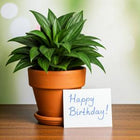
Send a Plant Gift with a Personal Touch!
Every gift deserves a personal touch: We’ll deliver the plant to their door and your message to their inbox.

Monstera plants, with their iconic split and perforated leaves, have become the ultimate statement houseplants for modern plant lovers. Whether you're drawn to the classic Swiss cheese holes or the stunning variegated varieties, these tropical beauties bring a touch of the jungle indoors without demanding expert-level care. This comprehensive guide covers everything you need to know to keep any Monstera variety thriving in your home.
Monstera is an excellent choice if you're looking for a fast-growing plant that makes a visual statement without requiring constant attention. Most varieties are forgiving enough for beginners but interesting enough to keep experienced collectors engaged. The signature fenestrations (natural holes and splits in the leaves) develop as plants mature, giving you something to look forward to as they grow.

These plants work well in homes with moderate to bright light and adapt to typical indoor humidity levels. However, if you have curious pets, keep in mind that all Monstera varieties are toxic if ingested, so placement matters.
Monstera plants thrive in medium to bright indirect light. In their native Central and South American rainforest habitat, they grow beneath the canopy, so they're adapted to filtered sunlight rather than harsh direct rays.

An east or west-facing window is ideal, where the plant receives gentle morning or afternoon light. North-facing windows can work if they're bright enough, while south-facing windows may require sheer curtains to diffuse intense midday sun. Too much direct light can scorch the leaves, causing brown patches or fading, especially on variegated varieties which are more sensitive.
While Monstera can tolerate lower light conditions, growth will slow and new leaves may not develop the characteristic fenestrations. Variegated varieties need more light than solid green types to maintain their coloring.
Water your Monstera when the top 2 inches of soil feel dry to the touch. This typically works out to every 7-10 days, though the exact timing depends on your home's temperature, humidity, pot size, and light levels.

The finger test is your best friend here. Stick your finger into the soil up to your second knuckle. If it feels dry at that depth, it's time to water. If it's still moist, wait a few more days.
When you do water, water thoroughly until excess drains from the bottom of the pot. This ensures the entire root system gets moisture and helps flush out any salt buildup from fertilizers. Always empty the drainage tray after 15-20 minutes so the plant isn't sitting in standing water.
Monstera plants prefer humidity levels of 60% or higher, but they're remarkably adaptable to average home conditions (typically 40-50%). You'll get the best growth and healthiest leaves with higher humidity, but most varieties won't suffer dramatically in normal indoor environments.
If you notice brown, crispy leaf edges, low humidity could be the issue. Simple ways to boost humidity include grouping plants together, placing the pot on a pebble tray with water, or running a humidifier nearby. Misting can provide a temporary boost but isn't a long-term solution.
Keep your Monstera in temperatures between 65-80°F for optimal growth. This range mimics their tropical origins and keeps the plants actively growing during spring and summer.
Monstera can tolerate brief dips to 60°F but will slow growth considerably. Avoid placing them near cold drafts, air conditioning vents, or heating registers, as sudden temperature fluctuations can stress the plant. Keep them away from exterior doors in winter and never let them experience frost.
Monstera needs a well-draining, chunky potting mix that retains some moisture while allowing excess water to escape. A standard indoor potting mix works as a base, but you'll want to amend it for better drainage.
Mix in perlite, orchid bark, or coconut coir to create air pockets in the soil. A good ratio is 60% potting soil, 20% perlite, and 20% orchid bark. This combination prevents compaction and root rot while still holding enough moisture between waterings.
The soil should feel light and airy, not dense or clay-like. If water sits on the surface for more than a few seconds before absorbing, your mix is too heavy.
Always use a pot with drainage holes. This single factor prevents more Monstera deaths than any other care adjustment. Drainage holes allow excess water to escape, preventing the soggy conditions that lead to root rot.

Choose a pot that's 1-2 inches larger in diameter than the current root ball when repotting. Going too large can cause the soil to stay wet too long, while too small restricts growth. Terracotta pots are excellent for Monstera because they're porous and allow soil to dry more evenly, though plastic or ceramic pots work fine if you adjust your watering accordingly.
Feed your Monstera monthly during the growing season (spring through early fall) with a balanced liquid fertilizer diluted to half strength. A 20-20-20 or similar NPK ratio works well for most varieties.
During fall and winter, when growth naturally slows, reduce feeding to every 6-8 weeks or pause entirely. Overfertilizing can cause salt buildup in the soil and burn the roots, leading to brown leaf tips and stunted growth.
If you prefer a low-maintenance approach, use a slow-release fertilizer at the beginning of the growing season according to package directions.
Most Monstera varieties are natural climbers with a vining growth habit. In the wild, they use aerial roots to climb up trees toward the light. Indoors, you can let them trail from a hanging basket, drape over a shelf, or train them to climb a moss pole or trellis.

With support, climbing varieties can grow quite large, with vines reaching 10-15 feet or more indoors. Leaf size varies significantly by variety, from small 4-6 inch leaves on compact types to massive 2-3 foot leaves on mature deliciosa specimens. Growth rate is generally fast, especially during spring and summer, with many varieties producing new leaves every few weeks.
The iconic fenestrations develop as plants mature and receive adequate light. Younger plants and those in lower light may produce solid leaves without holes or splits.
Pruning keeps your Monstera looking tidy and encourages bushier growth. Use clean, sharp scissors or pruning shears to remove any yellow, brown, or damaged leaves at the base of the stem.
If your plant is getting leggy or too long, you can trim back vines to your desired length. Cut just above a node (the bump on the stem where leaves emerge) to encourage new growth from that point.
Wipe the leaves occasionally with a damp cloth to remove dust. This helps the plant photosynthesize more efficiently and shows off those beautiful fenestrations. It also supports the plant's natural air-purifying qualities.
Repot your Monstera every 1-2 years or when you notice roots growing through the drainage holes or circling the soil surface. Spring is the ideal time to repot, as the plant is entering its active growing season and will recover quickly.
Signs it's time to repot include water running straight through the pot without absorbing, the plant drying out much faster than usual, or visible root crowding. Choose a pot 1-2 inches larger in diameter and refresh the soil completely.
Most Monstera varieties are easy to propagate from stem cuttings, making it simple to share with friends or expand your collection. Cut a 4-6 inch section of stem that includes at least one node and one or two leaves. The node is essential, as this is where new roots will form.

Place the cutting in water, ensuring the node is submerged but the leaves stay above the waterline. Change the water every few days to keep it fresh. Roots typically appear within 2-3 weeks.
Once roots are 2-3 inches long, you can plant the cutting in soil. Keep the soil consistently moist for the first few weeks as the plant adjusts. You can also propagate directly in moist soil, though water propagation lets you watch the root development.
The Monstera family offers incredible diversity, from easy-care classics to rare collector's pieces. Here are some of the most popular varieties you can grow at home:
The classic "Swiss Cheese Plant" with large, deeply split leaves. This is the most common variety and one of the easiest to care for. Mature plants can have leaves over 2 feet wide with dramatic splits and holes. Perfect for making a bold statement in any room.

Known as the Swiss Cheese Vine or Monkey Mask Plant, this variety features smaller leaves (4-8 inches) with distinctive oval holes rather than splits. It has a more compact, vining growth habit that works beautifully in hanging baskets or trained on a small trellis. Shop Monstera Adansonii

A stunning variegated variety with creamy-yellow splashes and speckles across dark green leaves. The variegation is stable and consistent, making it more reliable than some other variegated types. Requires brighter light than solid green varieties to maintain coloring. Shop Thai Constellation

A highly sought-after variegated variety with dramatic white and green marbling. Each leaf is unique, and the variegation can range from subtle to half-moon patterns. Requires careful light management and slightly more attention than solid green types. Shop Albo Borsigiana

A unique variety with thick, textured leaves that have a pebbled surface and deep green color. Unlike other Monsteras, mature leaves don't develop fenestrations. Compact growth habit makes it perfect for smaller spaces. Shop Monstera Peru

A shingling variety that grows flat against surfaces with heart-shaped leaves featuring silver variegation when young. As it matures, leaves become larger and greener. Unique growth habit makes it a conversation starter. Shop Monstera Dubia

Can't decide? Our Monstera Bundle lets you experience multiple varieties at once, perfect for collectors or those wanting to compare growth habits.
Browse our complete Monstera collection to find the perfect variety for your space.
Yellow leaves usually indicate overwatering, though they can also signal natural aging. If only the oldest, lowest leaves are yellowing one at a time, this is normal. If multiple leaves are turning yellow, especially newer growth, check your watering habits and ensure the soil is drying out between waterings.
Brown, crispy leaf edges typically point to low humidity, underwatering, or salt buildup from overfertilizing. Increase humidity around the plant, ensure you're watering thoroughly when the top soil is dry, and flush the soil occasionally with plain water to remove excess salts.
Drooping leaves can mean either underwatering or overwatering. Check the soil moisture. If it's bone dry, the plant needs water. If it's soggy, you may be dealing with root rot. Adjust your watering schedule accordingly.
Root rot occurs when soil stays too wet for too long, causing roots to suffocate and decay. Signs include yellowing leaves, a foul smell from the soil, mushy stems, and overall wilting despite wet soil. If caught early, you can repot into fresh, well-draining soil after trimming away any black or mushy roots.
Monstera can occasionally attract spider mites, mealybugs, or scale. Check the undersides of leaves regularly for tiny pests or webbing. Treat infestations with insecticidal soap or neem oil, and isolate the affected plant from others until the problem is resolved.
For variegated varieties, loss of white or yellow coloring usually means insufficient light. Move the plant to a brighter location. If new growth is completely green, you may need to prune back to variegated sections to encourage variegated growth.
Don't place your Monstera in direct sunlight, as this will scorch the leaves, especially on variegated varieties. Avoid overwatering, which is the most common cause of Monstera problems. Don't use a pot without drainage holes, no matter how pretty it is.
Skip the urge to mist daily as a humidity solution. While it feels helpful, it doesn't provide lasting humidity and can promote fungal issues if leaves stay wet too long. Don't fertilize during winter when the plant is resting, and never fertilize a dry plant, as this can burn the roots.
Monstera looks stunning in living rooms, home offices, or bedrooms where it can make a statement. Place it near an east or west-facing window for ideal light, or a few feet back from a south-facing window.

Vining varieties work beautifully in hanging planters where the vines can cascade, while larger varieties like deliciosa are perfect trained up a moss pole for a more upright, sculptural look. Bathrooms with windows can be excellent spots due to naturally higher humidity.
Just remember to keep them out of reach of pets and small children, as all Monstera varieties are toxic if ingested.

Is Monstera pet friendly?
No, all Monstera varieties are toxic to cats and dogs if ingested. They contain calcium oxalate crystals that can cause mouth irritation, drooling, vomiting, and difficulty swallowing. Keep them in a location your pets can't access. For more information, visit the ASPCA's toxic plant database.
Is Monstera good for beginners?
Yes, most Monstera varieties are excellent beginner plants, especially deliciosa and adansonii. They're forgiving of occasional watering mistakes, adapt to average home conditions, and grow quickly to reward your efforts. Variegated varieties require slightly more attention but are still manageable for beginners willing to learn.
Can Monstera live in low light?
Monstera can survive in low light but won't thrive. Growth will slow significantly, and new leaves may not develop the characteristic fenestrations. Variegated varieties will lose their coloring in low light. For best results, provide medium to bright indirect light.
How often should I water Monstera?
Water when the top 2 inches of soil are dry, typically every 7-10 days. The exact frequency depends on your home's conditions, pot size, and variety, so always check the soil rather than following a strict schedule.
Why are the leaves turning yellow?
Yellow leaves usually indicate overwatering, though one or two older leaves yellowing naturally is normal. Check that your soil is drying out between waterings and that your pot has proper drainage.
Does Monstera need humidity?
Monstera prefers 60%+ humidity but adapts well to average home humidity (40-50%). Higher humidity promotes healthier growth and prevents brown leaf edges, but it's not absolutely necessary for the plant to survive.
How fast does Monstera grow?
Most Monstera varieties are fast growers, especially during spring and summer. With proper care, they can produce new leaves every few weeks during the growing season. Growth slows naturally in fall and winter.
What's the difference between Monstera deliciosa and adansonii?
Deliciosa has larger leaves with deep splits and holes, while adansonii has smaller leaves with oval holes but no splits. Deliciosa grows larger overall, while adansonii has a more compact, vining habit perfect for hanging baskets.

🌿 More Planties to Explore
Love learning about plants? Keep exploring our Plant Care Library to discover more tips, fun facts, and easy-care guides for your favorite greens — from tropical wonders to low-light beauties.